
The Prisoner in the Gulag: Introduction

This post is the introduction to one of my periodic series of posts in which I apply a possible interpretation to the series The Prisoner, and see how it applies and fits. In this case it is the suggested interpretation that the series depicts and criticises life in the Soviet Union or possibly specifically Russia. It is strange that I haven’t got round to this interpretation before now, since the Cold War and references to life on the other side of the Iron Curtain run through quite a lot of the television I blog about here. For my own convenience I will also periodically mention a possible reference to the Stasi in East Germany and thus get the entire Eastern Bloc out of the way in one series of posts, although I think Russia is a far better fit for the show than East Germany.
The Soviet Union was, from 1922 to 1991, the largest country in the world and was a federation of national republics. It was a one-party state governed by the Communist Party of the Soviet Union, and was the first communist state in the world. I think it important to stress at the beginning that in the 1960s there was a huge difficulty in the West in describing life in the Soviet Union: the whole area wasn’t open to Westerners just visiting, and the official state media was dominated by party propaganda. This difficult has been amplified in the intervening decades because current historical accounts meld with contemporary propaganda, rumour, and Western perceptions of life in the Soviet Union. As far as I know Patrick McGoohan also studiously avoided giving an ‘official’ single interpretation of the show, so it is also impossible to know his own views on the Soviet Union, although as a practising Roman Catholic at the time he is unlikely to have been sympathetic to communism.
Nor am I qualified in any way to write this series of posts. Beyond my peculiar interest in Chernobyl as a result of my interest in nuclear disasters, I am completely ignorant of life in teh Soviet Union. It has also been fairly difficult to find out information of what life in the Soviet Union in the 1960s was likely to be like or the Western perception of it. Much of the literature is either in Russian or takes the form of memoirs of novels, which I have been reluctant to trust. I have, however, been heavily reliant on Michael Binyon’s Life in Russia, which although written in the 1980s, is written by a Briton, is factual, and does look backwards at various points.
As always I am going to make a prediction about what I will find in this series of posts. The first is the one I always make: I am convinced that The Prisoner is not intended to have only one interpretation, and as we know did not end up quite as McGoohan would have wished. As a result I don’t think that any one interpretation fits the series perfectly, and every interpretation I have tried so far has come apart towards the end of the series anyway. I therefore think that the Soviet Union interpretation will only fit the earlier episodes best.
I think there are two possible inspirations for the Village in the Soviet Union.
The first is that I think the series can specifically be interpreted to reference the gulags, a series of punishment camps in the Soviet Union. You will rightly say that even The Village is much less violent and oppressive than the gulags, but my theory is that The Village could be intended to be a sort of parody of the gulags. Rather than overt oppression, the political oppression and control is disguised as a happy holiday camp, but no less real. The control works by getting into people’s heads in a way that propaganda has failed to, so that they accept their lot and are content to die like rotten cabbages.
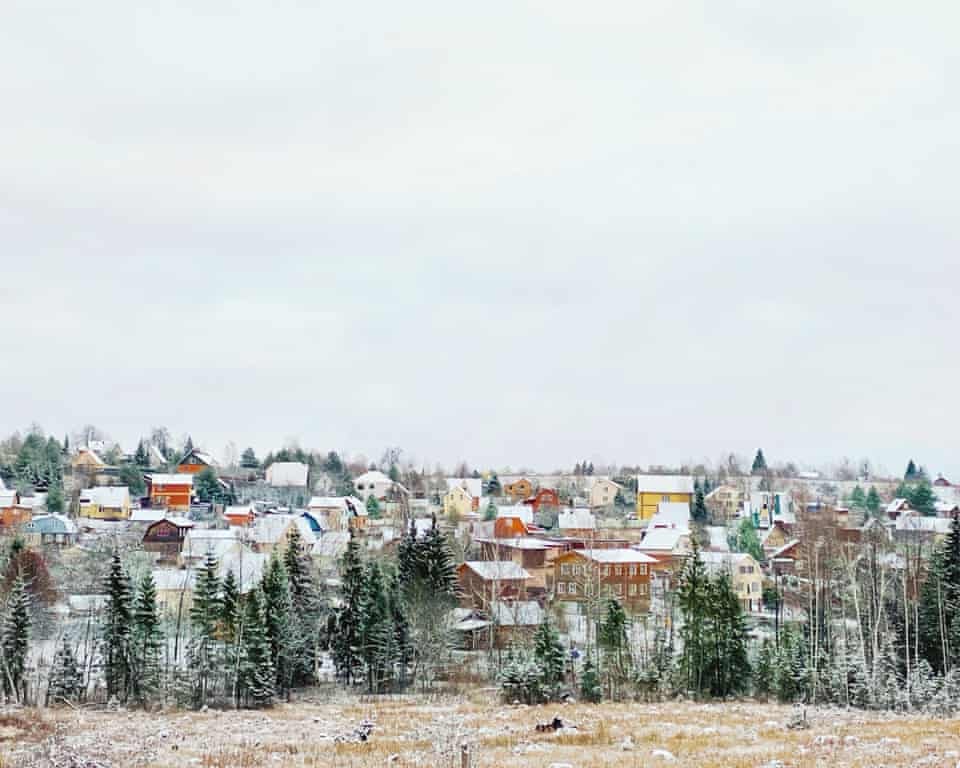
The other possible inspiration is in the dacha culture of Russia and other former Soviet Union countries. These are country holiday homes, owned by city dwellers and not for full-time occupation. They have a long history, but under communism were adapted to the current regime and often a company would have a dacha for their employees to use communally. The dacha culture fits the Village particularly well because they are usually found in groups and the sort of happy communal co-operation found under Communism fits the Village down to a T.
I can also immediately identify a couple of problems with a Soviet Union interpretation for The Prisoner. Everything which went on in the Soviet Union was ideologically driven by the needs of the Communist Party. The problem here is that in The Prisoner what is behind The Village is deliberately hidden from the viewer until the final episode, so that there isn’t an obviously ideological basis to what is happening. You could say that the invisible Number 1 fulfils the role of the Communist Party in being behind everything, controlling everything and yet ultimately deceptive, however the problem remains that Number 1 is never revealed to be an ideology or state. I don’t think you can be in a Communist country in the world and not have the governing Communist Party draw attention to itself, surely.
The other problem with this series of posts is a sort of irony rather than a drawback. In the Soviet Union, the citizens didn’t really have any worries unless they did something judged to be subversive or not communal. As long as they carried on working, frequently in a job requiring little to no actual work, they would be looked after for life. They just had to turn up to the required party and union meetings, do their exercises and nod along. This may sound like a living nightmare to the ‘but my freedom’ crowd, but I want to stress here that the citizen was essentially looked after and draw attention to another drawback, which was that in reality the necessities of life could be hard to come by. Because life was geared around plans and as long as you met an abstract plan you weren’t really bothered about your performance, being in a job for life, the state became hugely wasteful and inefficient. This resulted in a scarcity of consumer items, leading to both hoarding and queuing. The irony here is that this meant the Soviet Union couldn’t really fulfil the dream of Communist living, yet ironically I would suggest that The Village is an example of a place where the Communist dream was actually better attained (apart from the lack of overt ideology). In the Village groceries magically appear, everyone has some assigned role, everything is communal, there is no shortage...ironically fulfilling the Communist dream more successfully than the Soviet Union!
As always I will go through the episodes of the show one or two at a time, considering how this Soviet Union theory can be applied to them.
This blog is mirrored at
culttvblog.tumblr.com/archive (from September 2023) and culttvblog.substack.com (from January 2023 and where you can subscribe by email)
Archives from 2013 to September 2023 may be found at culttvblog.blogspot.com and there is an incomplete index to the tags used on the Tumblr version at https://www.tumblr.com/culttvblog/729194158177370112/this-blog
There is an index to posts on the Substack version here: https://culttvblog.substack.com/p/index-of-posts?r=1q6qo6&utm_campaign=post&utm_medium=web&triedRedirect=true
About this blog: https://culttvblog.substack.com/about
Vote Green for real hope and real change! greenparty.org.uk